Legal Regulations and Contracts for Property Purchase in Mallorca
All of the following information is for guidance only and is in no way a substitute for expert tax and legal advice. Rossitza Hantelmann Estate S.L. does not provide legal or tax advice and accepts no liability for the content.
Although both Germany and Spain uphold the principle of 'public faith' (fe pública) in the land registry, there are some significant differences between the two countries. Firstly, in Spain, anyone who declares a legitimate interest has access to the land registry, whereas in Germany, only specific authorized parties such as notaries, courts, and owners can inspect it. This allows potential buyers in Spain, for example, to review the land registry. Furthermore, the land registries in Germany and Spain differ in their content and structure. In Germany, the land registry is divided into three sections – owners, encumbrances and restrictions, and mortgages and land charges – with all other extensive information found in the main file. In contrast, the Spanish land registry does not have such a distinction. Every legal transaction is continuously entered into the register, which can often lead to a lack of clarity. It is important to note that when buying and selling properties in Mallorca, the register plays an extremely crucial role: the content of the publicly maintained register is indisputable. Therefore, one should be particularly cautious regarding information provided by sellers or real estate agents concerning plot numbers or handed-out property plans, as these are not binding, and the values stated there often differ from the information in the register.
RH-Tip: It is strongly recommended that every prospective buyer of a property in Mallorca inspect the Spanish land registry before concluding the purchase contract. A simplified, basic extract – known as a 'nota simple' – provides sufficient initial security for the purchase.
The Spanish Cadastre, known in Spain as Catastro, is a public institution that collects city maps, drawings, and plans of properties.
The Catastro is important because it forms the basis for the 'valor catastral' (cadastral value) and for estimated values used for property-related tax assessments.
RH-Tip: The legal binding nature of property values in the Spanish Cadastre differs significantly from that in Germany! Please refer to the section on the Spanish Land Registry for detailed information.
The purpose of an option contract is to establish a legally binding agreement between a property buyer and a property owner. While not legally mandatory in Spain, this preliminary contract is standard practice.
Firstly, the contract provides an opportunity to use the time before the notarization to prepare all necessary documents or, for example, to apply for financing. Secondly, both parties typically need time to prepare for a potential move, as in Spain, unlike Germany, the property is handed over directly at the notary appointment.
The 'Optionsvertrag' should not be literally understood as an option agreement in the German sense, as it does not create a binding legal transaction in terms of property law. Instead, it is a deposit agreement that makes the promise to purchase binding for both parties. In this agreement, a deposit on the purchase price (usually 10%) is transferred by the buyer to a notary's escrow account, and all essential details such as the latest notary appointment, the procurement of necessary documents, and other agreements regarding the purchase contract are regulated.
Should either party fail to adhere to this contract, the deposit must be paid to the other party as a contractual penalty.
If all conditions for the legally valid purchase of the property are already met, an option contract can be waived, and the purchase can proceed directly and legally before a notary with the issuance of the corresponding purchase deed.
RH-Tip: Concluding a deposit agreement is highly recommended. This agreement should be drafted or reviewed by a specialist lawyer for real estate law. The term 'Optionsvertrag' should be strictly avoided, as it can lead to significant tax disadvantages (property transfer tax!) later on.
What is an N.I.E. number? N.I.E. stands for Número de Identidad de Extranjero, which means Foreigner Identification Number (or Foreigner's Identification Number). The NIE is your multi-purpose identification and tax number in Spain.
RH-Tip: If you have sufficient time before purchasing a property, apply for your N.I.E. at the nearest Spanish consulate. This can usually be done with an application and a small fee.
If you have already found a property to purchase but do not yet have an N.I.E., please contact us. We can connect you with a reliable and efficient service partner who, for a fee, can quickly and easily obtain your Spanish tax number.
The Certificate of Habitability (cédula de habitabilidad) is a necessary and important document for all property sales and purchases. If it is not available, the notary cannot notarize the transaction.
RH-Tip: Many property owners in Mallorca have not applied for this document in the past. However, it is possible to obtain a new one – please contact us for assistance.
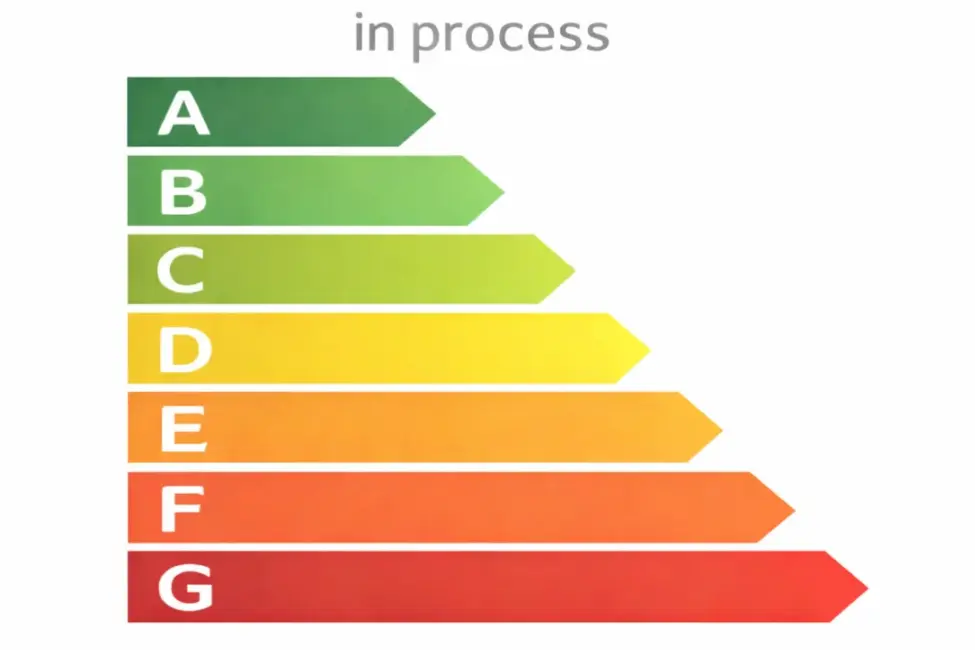
The Energy Performance Certificate – Certificado de eficiencia energética – is mandatory for sales and rentals in Mallorca. The legal basis for this, effective June 1, 2013, in Spain, is a European Consumer Protection Law (EC Directive 2002/91/CE) based on Royal Decree RD 235/2013, which requires every property sold or rented to have an energy certificate.
RH-Tip: When considering a property offer, please ensure that the Energy Performance Certificate is available. A property cannot be offered for sale without an existing energy certificate.