

Anyone travelling by car in Mallorca or on the Spanish mainland should familiarise themselves with the basic traffic regulations. Although many rules overlap with those in other European countries, there are some differences that can become relevant in everyday life. It is particularly useful to know the most important rules in advance when using a rental car.
A solid understanding of traffic rules not only contributes to your own safety but also helps to avoid unnecessary fines or misunderstandings. At the same time, it ensures a more relaxed driving experience, especially in unfamiliar traffic situations.
General Traffic Regulations in Spain
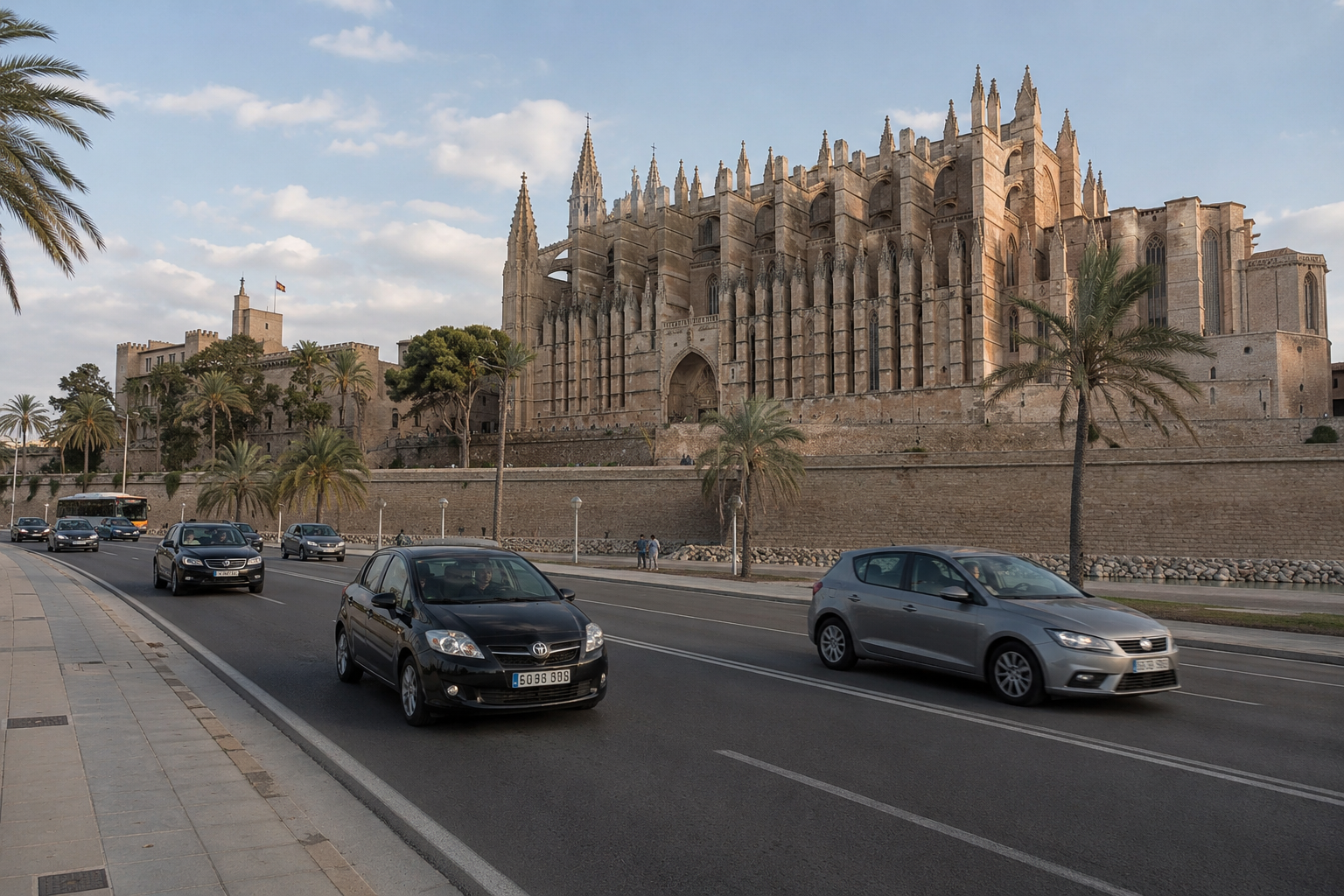
Traffic regulations are uniform throughout Spain and apply to both the mainland and the Balearic Islands. Many regulations are generally based on European standards, but there are some details that should be observed in everyday life.
The most important basic rules include:
- Traffic keeping to the right with overtaking on the left
- Seatbelt required for all occupants, regardless of seating position
- Use of mobile phones only with hands-free kits
- Obligation to always carry valid documents
These rules form the basis of road traffic in Spain. They show that while the system feels familiar, it is handled more strictly in its consistent implementation than in some other countries.
Speed limits in Spain
Speed limits are among the central regulations in Spanish road traffic. They are clearly defined but are strictly enforced, particularly on motorways and country roads.
The most important guidelines are:
- Within built-up areas: generally 30 to 50 km/h, depending on the road
- Outside built-up areas: usually 90 km/h
- Motorways and expressways: up to 120 km/h
These values serve as a guideline, but the current signage on site is always decisive. Consistent adherence to speed limits is particularly important, as infringements are punished quickly and reliably.
Drink-driving limits and checks
Spain pursues a clear line regarding alcohol and road traffic. The permissible limits are comparable to other European countries, but checks are carried out frequently and consistently.
The current limits are:
- 0.5 per mille for experienced drivers
- 0.3 per mille for novice drivers and certain professional groups
This regulation shows that even minor infringements can have consequences. As police checks are carried out regularly, responsible handling of alcohol in road traffic is particularly important.
Particularities of road traffic in Mallorca
Mallorca has some particularities that arise from the island's geographical and tourist structure. These primarily concern route planning, traffic volume, and the composition of road users.
Typical characteristics include:
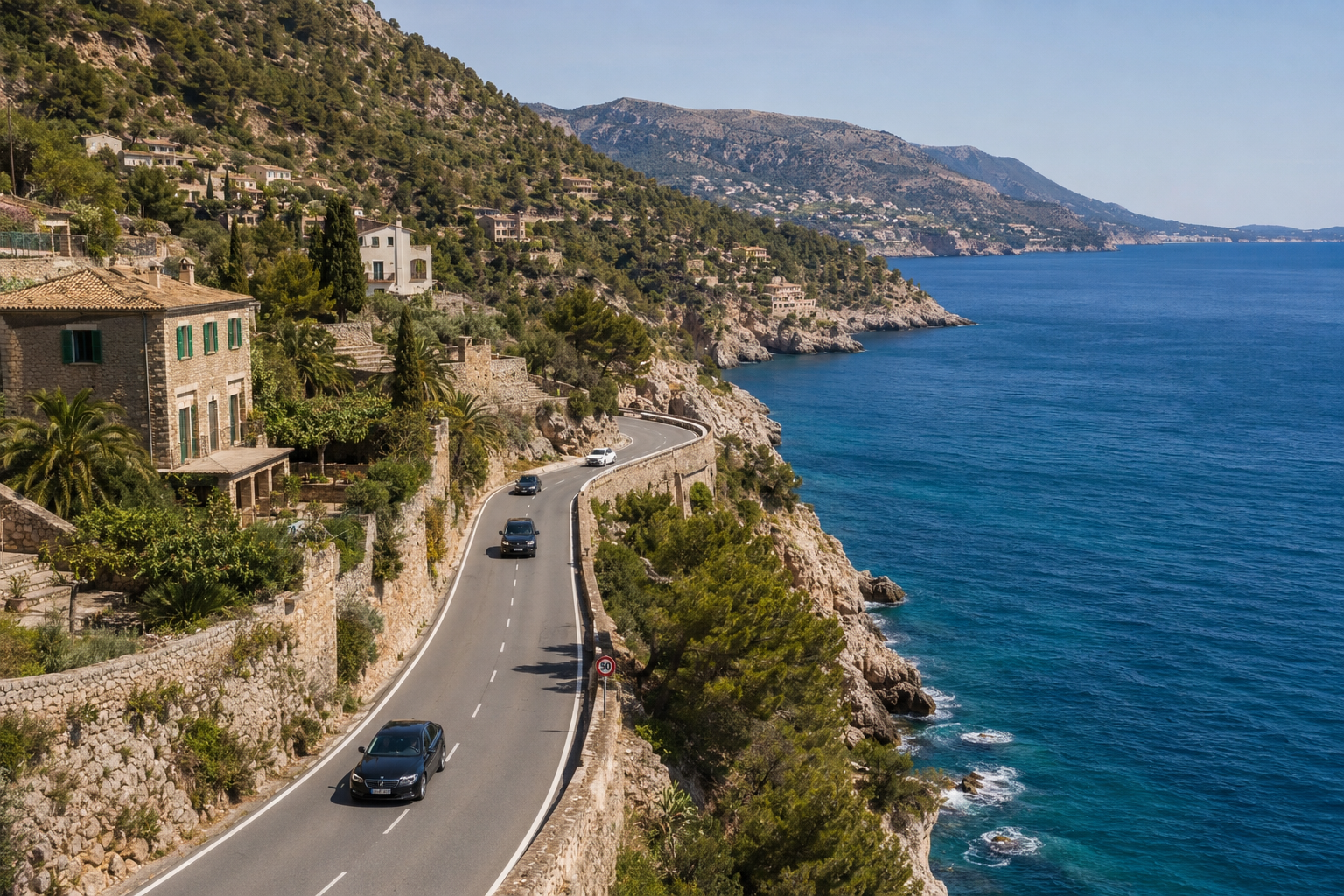
- winding roads, particularly in the Serra de Tramuntana
- High proportion of cyclists on popular routes
- Narrow streets in historic town centres
- Seasonal fluctuations in traffic volume
These factors highlight that road traffic can vary significantly depending on the region and the season. Therefore, an adapted driving style is crucial to travel safely and relaxed.
Parking in Mallorca and Spain
The parking system in Spain is based on a clear colour-coding system that quickly provides orientation in daily life. Nevertheless, misunderstandings frequently occur, especially among visitors who are not familiar with the regulations.
The main parking zones are:
- White lines: free parking without time limit
- Blue lines: paid parking with time limit
- Yellow lines: no parking at any time
This classification makes orientation considerably easier, but assumes that the meaning of the colours is known. Parking is regularly monitored, especially in tourist regions, which is why correct use of the zones is important.
Driving and safety
Besides legal regulations, your own driving behaviour also plays a central role. Especially on an island with different types of roads and varying traffic levels, a predictive driving style is particularly important.
For safe driving, the following aspects are crucial:
- adequate distance to the vehicle in front
- adjusted speed, especially in bends
- special attention to cyclists
- Proactive behaviour in narrow streets
These points help to avoid typical risks and increase your own safety as well as that of other road users.
Car hire and traffic regulations
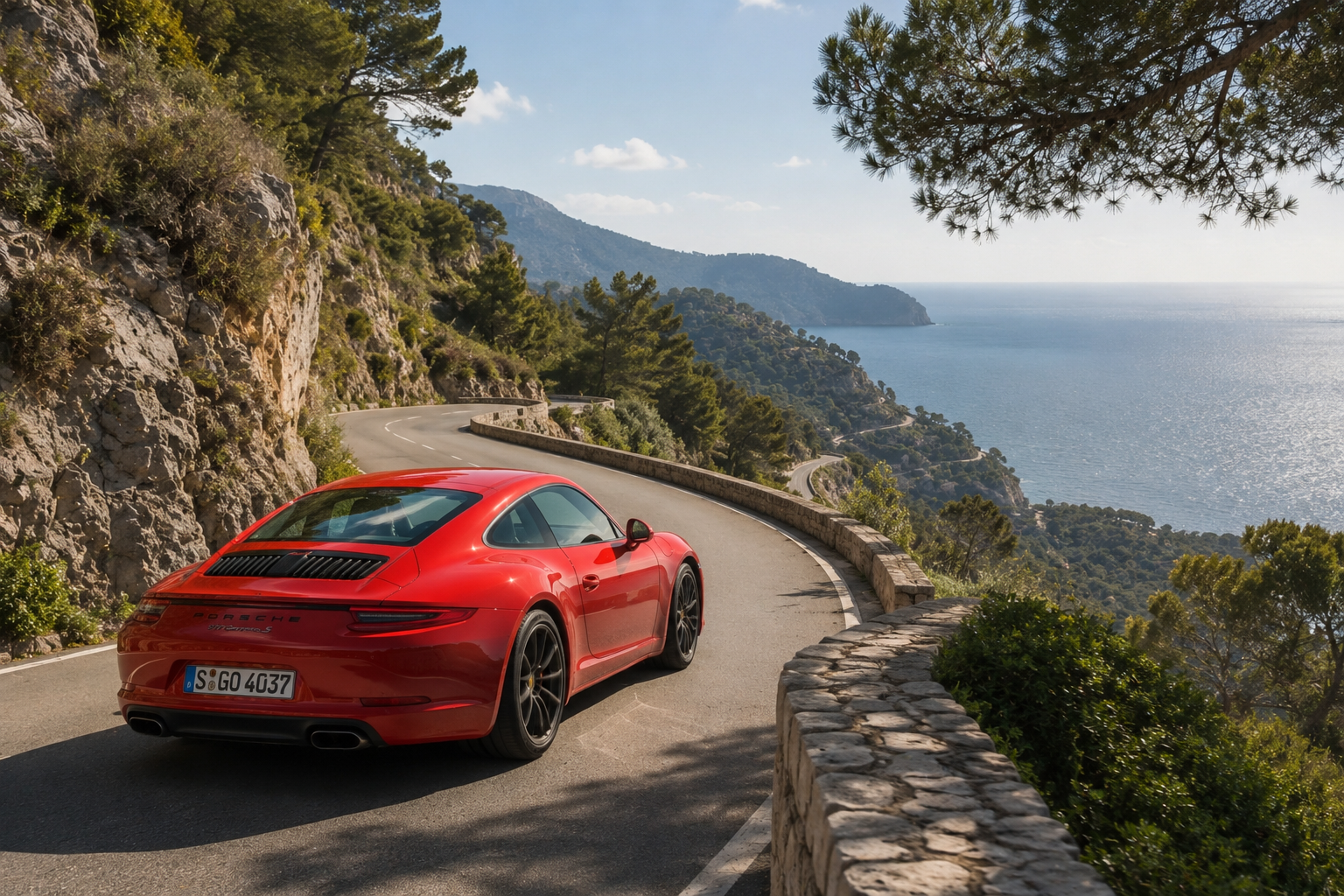
Many visitors on Mallorca use a hire car to explore the island flexibly. The same traffic rules apply as for locals, regardless of whether the vehicle is rented or privately owned.
Important points when dealing with rental cars include:
- Always carry your driving licence and ID.
- Keep the rental agreement to hand
- Check vehicle before starting journey
- Familiarise yourself with the insurance terms and conditions
These aspects help to avoid potential problems and ensure greater safety when using the vehicle.
Traffic and quality of life in Mallorca
Adherence to traffic rules is an essential part of the quality of life on Mallorca. Especially in areas with high traffic volume, a clear structure ensures safety and reliability in everyday life.
For residents and long-term users of the island, well-functioning infrastructure plays an important role. Properly managed traffic contributes to efficient and safe travel between different regions.
Frequently asked questions about traffic rules in Spain
What are the traffic rules in Spain?
In Spain, traffic drives on the right, and fundamental regulations largely align with European standards. Nevertheless, rules such as speed limits or the mobile phone ban are more strictly enforced.
What is the maximum speed?
In built-up areas, the speed limit is usually between 30 and 50 km/h; outside built-up areas, it is around 90 km/h; and on motorways, it can be up to 120 km/h. The current road signs always take precedence.
What is the legal alcohol limit?
For experienced drivers, there is a limit of 0.5 parts per thousand, and for learner drivers, 0.3 parts per thousand. Checks are carried out regularly.
How does parking work?
Parking is regulated by colour: white means free, blue means paid, and yellow means no parking. This regulation is particularly relevant in cities.
Is driving in Mallorca difficult?
Not generally, however, winding roads and narrow town centres require attention. An adapted driving style is crucial.
What should one consider when renting a car?
Valid documents, knowledge of the insurance terms and conditions, and a brief vehicle check before starting your journey are important. This will help you avoid common problems.